



Introduction
Against the Storm gained attention not because it reinvented city-building, but because it attempted something few strategy games dared to try: merging classic settlement management with a roguelike structure. Each run promised fresh modifiers, unpredictable events, and permanent meta-progression, all wrapped in a dark fantasy world plagued by endless storms. Early reception praised its originality and replayability.
However, as the player base matured and long-term progression systems expanded through updates, a specific issue emerged as a central point of debate: the gradual erosion of difficulty integrity caused by meta-progression and perk stacking. This article examines how Against the Storm’s core balance shifts over time, why its roguelike identity weakens with mastery, and what this means for the future of hybrid strategy design.
1. The Roguelike Promise of Uncertainty
Against the Storm’s core appeal lies in unpredictability. Each settlement begins with unknown biomes, random blueprints, and limited resources. Early-game tension forces players to adapt constantly.
In the early hours, every decision feels dangerous. Choosing the wrong building or mishandling villagers can collapse a run quickly. This uncertainty is what defines the roguelike loop and separates the game from traditional city builders.
Yet, this tension is fragile. It relies on the player lacking information, tools, and systemic advantages—conditions that inevitably disappear with progression.
2. Meta-Progression as a Double-Edged Sword
Permanent Unlocks Change the Game’s Nature
As players complete runs, they unlock permanent bonuses: improved starting resources, additional blueprint choices, passive buffs, and stronger cornerstones.
These upgrades are designed to reduce frustration and reward mastery, but they also flatten difficulty curves. What once required clever improvisation becomes routine optimization.
When Progression Undermines Risk
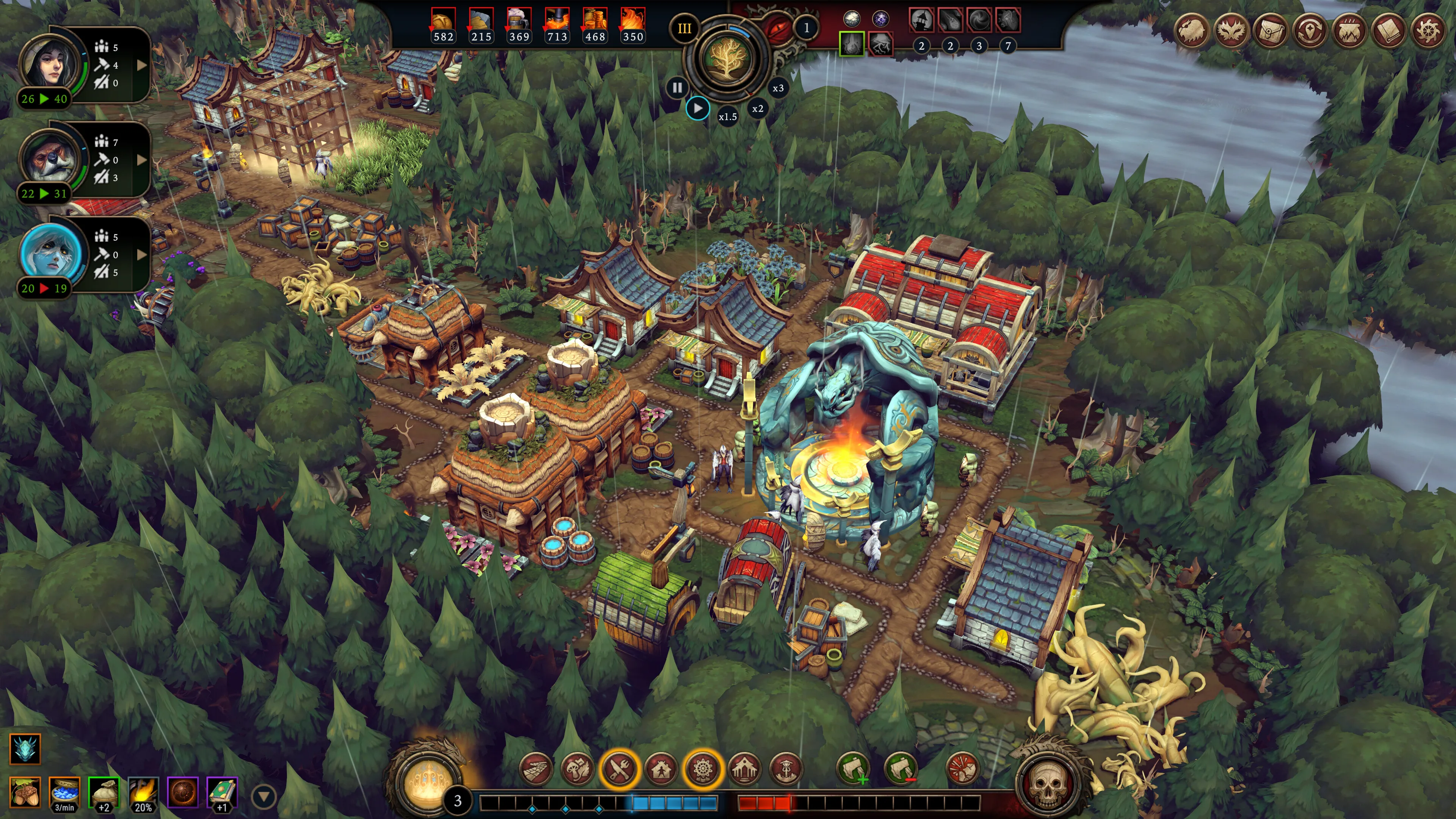
The more meta-upgrades a player unlocks, the less meaningful early-game danger becomes. Mistakes that once ended runs now barely matter.
This transforms the game from survival strategy into efficiency simulation.
3. Perk Stacking and Run Determinism
Cornerstones Lose Their Weight
Cornerstones are meant to define runs, pushing players into unique strategies. However, with enough unlocked rerolls and selection control, players can engineer near-perfect synergy every time.
Instead of adapting to randomness, experienced players filter it out.
Predictable Success Patterns
Over time, players identify optimal combinations and repeat them across runs. The roguelike loop becomes deterministic, undermining replayability.
4. The Storm as a Diminishing Threat
Early Fear vs Late Indifference
The Blightstorm mechanic initially instills dread. Corruption, hostility, and pressure force tough trade-offs.
Later, with meta-progression bonuses and improved tools, storms become routine maintenance checks rather than existential threats.
Emotional Impact Declines
When the storm stops being dangerous, it also stops being meaningful narratively and mechanically.
5. Difficulty Scaling Breaks at High Skill Levels
Prestige Levels Expose Cracks
Prestige difficulty was designed to restore challenge. While it succeeds temporarily, it often relies on numerical punishment rather than systemic complexity.
Players don’t adapt creatively—they simply compensate mathematically.
The Ceiling Problem
Highly skilled players eventually outgrow the system. At that point, difficulty becomes artificial instead of emergent.
6. Resource Abundance and Economic Inflation
Trade Routes Become Too Powerful
As players unlock more trade options and discounts, scarcity fades. Trade routes begin to dominate all other economic systems.
This reduces internal production decisions to secondary concerns.
The End of Meaningful Scarcity
Scarcity is the soul of strategy tension. Once gone, the game becomes procedural busywork.
7. Community Meta and Strategy Homogenization
Shared Knowledge Accelerates Breakdown
Community guides, tier lists, and optimal paths spread rapidly. What was once a sandbox becomes a solved system.
This is not a failure of players—but of systems that cannot resist optimization.
The Cost of Transparency
Against the Storm exposes too much of its internal math, making it easier to reverse-engineer optimal play.
8. Developer Responses and System Tweaks
Adjustments, Not Overhauls
Updates have introduced balance changes, new biomes, and revised perks. These help but do not address the core issue.
The underlying structure still rewards control over adaptation.
A Hard Problem to Solve
Fixing this would require:
- Reduced meta-progression power
- Stronger negative synergies
- Unavoidable randomness
Each solution risks alienating casual players.
9. What Against the Storm Teaches the Genre
The game highlights a key lesson for hybrid design:
- Roguelikes thrive on loss
- City builders thrive on stability
Combining them requires sacrificing one—Against the Storm slowly sacrifices the former.
10. The Future of Roguelike City Builders
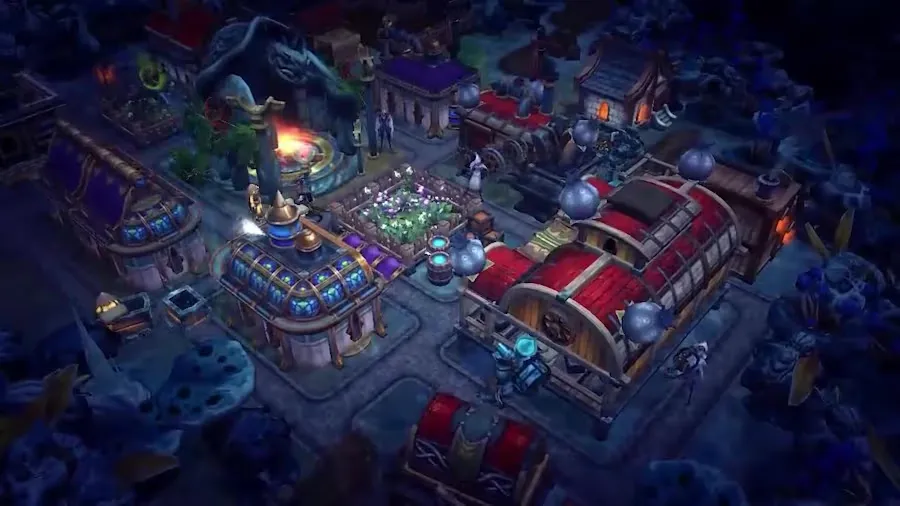
Against the Storm remains a landmark title, but its balance issues serve as a warning.
Future games must:
- Limit permanent power
- Preserve uncertainty
- Design randomness that cannot be filtered
Otherwise, mastery will always hollow out tension.
Conclusion
Against the Storm succeeds as a bold experiment but struggles to preserve its roguelike soul over time. Meta-progression, perk stacking, and economic inflation gradually erode difficulty and emotional stakes. The game does not collapse—it stabilizes, and in doing so, loses the chaos that once defined it.
Its greatest achievement may be proving how difficult it is to balance permanence and impermanence within a single design.
160-character summary
Against the Storm’s meta-progression slowly undermines its roguelike tension, turning unpredictable survival into deterministic optimization over time.