






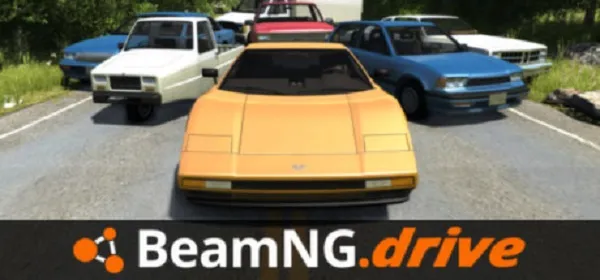
In BeamNG.drive, driving is not just about pressing the accelerator and steering through corners. The game’s soft-body physics engine simulates real-world vehicle behavior with incredible accuracy, meaning every input — throttle, braking, steering, and weight transfer — directly affects how your car responds. This realism is what makes the game both incredibly rewarding and extremely challenging.
One of the most common “How to” issues players face is how to maintain control at high speeds without spinning out, crashing, or losing traction. Many players can drive comfortably at low speeds, but once velocity increases, even small mistakes result in catastrophic crashes. This happens because high-speed driving in BeamNG.drive requires understanding physics principles such as weight transfer, traction limits, and vehicle balance.
This guide focuses deeply on how to master high-speed driving control, following a structured progression from basic vehicle setup to advanced techniques like cornering lines, throttle modulation, recovery control, and terrain adaptation. By the end, you will understand not just what to do, but why each action works.
Understanding Vehicle Physics Before Driving Fast
Before attempting high-speed driving, you must understand how BeamNG.drive simulates vehicle physics. Unlike arcade racing games, every car in BeamNG.drive reacts dynamically to forces such as acceleration, braking, and cornering.
At higher speeds, these forces increase dramatically, making the car more sensitive to input.
Core physics concepts
Weight transfer
When accelerating, weight shifts to the rear wheels. When braking, it shifts to the front.
Traction limits
Each tire has a maximum grip level. Exceeding it results in sliding.
Momentum
Higher speed means more force required to change direction.
Understanding these principles helps you predict how your vehicle will behave.
Choosing the Right Vehicle for High-Speed Stability
Not all vehicles in BeamNG.drive are suitable for high-speed driving. Some cars are designed for off-road use, while others are built for performance.
Choosing the right vehicle is the first step toward stability.
Characteristics of stable high-speed cars
• Low center of gravity
• Balanced weight distribution
• Good suspension setup
Beginner-friendly vehicle types
Sports cars
Offer good balance between speed and control.
Touring vehicles
Provide stable handling for long-distance driving.
Avoid using unstable or top-heavy vehicles when learning high-speed control.

Setting Up Your Vehicle for Maximum Control
Proper vehicle setup can dramatically improve stability. Many players ignore tuning settings, which leads to unnecessary loss of control.
Key setup adjustments
Tire pressure
Lower pressure increases grip but reduces top speed.
Suspension stiffness
Stiffer suspension improves stability at high speed.
Differential settings
A balanced differential helps maintain traction during turns.
Setup checklist
• Ensure tires are properly inflated
• Adjust suspension for road conditions
• Test braking response
Tuning your vehicle creates a solid foundation for high-speed driving.
How to Accelerate Without Losing Control
Acceleration seems simple, but improper throttle use is one of the main causes of instability.
At high speeds, sudden acceleration can break traction, especially in powerful vehicles.
Throttle control techniques
Gradual acceleration
Apply throttle smoothly instead of instantly.
Traction awareness
Reduce throttle when wheels begin to slip.
Common mistakes
• Flooring the accelerator too quickly
• Ignoring wheel spin
• Overcorrecting steering during acceleration
Smooth throttle input keeps the vehicle stable.
Mastering Braking Techniques for High Speed
Braking is just as important as acceleration. Poor braking technique often leads to loss of control or understeer.
Advanced braking methods
Progressive braking
Apply brakes gradually instead of suddenly.
Threshold braking
Brake just before the wheels lock up.
When to brake
Always brake before entering a turn, not during it.
Braking checklist
• Slow down early
• Maintain straight-line braking
• Release brakes before turning
Proper braking ensures safe corner entry.
How to Take Corners Without Spinning Out
Cornering is the most difficult part of high-speed driving.
At high speeds, even small steering errors can cause loss of traction.
The ideal racing line
Entry
Approach the corner from the outside.
Apex
Turn toward the inside of the corner.
Exit
Accelerate out toward the outside again.
Steering techniques
• Avoid sudden steering inputs
• Use smooth, controlled movements
• Adjust steering based on speed
Following the correct line reduces the risk of spinning out.
Managing Weight Transfer During Turns
Weight transfer plays a critical role in vehicle stability during cornering.
Improper weight distribution can cause understeer or oversteer.
Understanding weight behavior
• Braking shifts weight forward
• Acceleration shifts weight backward
• Turning shifts weight sideways
Controlling weight transfer
Smooth inputs
Gradual movements prevent sudden shifts.
Balanced throttle and braking
Avoid combining heavy braking with sharp turns.
Managing weight keeps the car balanced.
How to Recover From Slides and Loss of Control
Even experienced players lose control sometimes. Knowing how to recover is essential.
Types of loss of control
Oversteer
Rear wheels lose traction.
Understeer
Front wheels lose grip.
Recovery techniques
Countersteering
Turn the wheel in the opposite direction of the slide.
Throttle adjustment
Reduce or increase throttle depending on the situation.
Recovery tips
• Stay calm
• Avoid overcorrection
• Focus on stabilizing the vehicle
Quick and controlled reactions can prevent crashes.
Adapting to Different Terrains and Road Conditions
High-speed driving varies depending on the surface.
Different terrains require different techniques.
Surface types
Asphalt
Offers high grip and stability.
Dirt
Reduces traction and increases sliding.
Wet surfaces
Lower grip and longer braking distances.
Adaptation strategies
• Reduce speed on low-grip surfaces
• Adjust braking distance
• Use smoother steering inputs
Understanding terrain helps maintain control.
Building Consistency Through Practice
High-speed driving is a skill that improves with practice.
Consistency is more important than speed.
Practice methods
• Repeat the same route multiple times
• Focus on one skill at a time
• Analyze mistakes after each run
Tracking improvement
Measure progress by:
• Fewer crashes
• Smoother turns
• Better control at higher speeds
Consistent practice leads to mastery.
Advanced Driving Mindset: Thinking Ahead at High Speed
At high speeds, reaction time decreases. Players must anticipate events rather than react to them.
Forward planning techniques
• Look ahead on the road
• Predict upcoming turns
• Adjust speed early
Mental discipline
Avoid aggressive or impulsive driving decisions.
Stay focused and maintain control.
A strategic mindset improves performance significantly.
Conclusion
Mastering high-speed driving in BeamNG.drive requires a deep understanding of vehicle physics, careful control of acceleration and braking, precise cornering techniques, and the ability to manage weight transfer effectively. By choosing the right vehicle, optimizing its setup, practicing smooth inputs, and learning how to recover from mistakes, players can transform their driving experience from chaotic crashes into controlled, high-speed performance. With time and consistent practice, the complex physics system becomes intuitive, allowing players to push their limits while maintaining full control over their vehicle.