.webp) gokugameh5.com
gokugameh5.comHollow Knight: How the Dreamers Turn the Black Egg into a Psychological Puzzle
Introduction
Hollow Knight is often praised for its atmosphere, exploration, combat, and enormous interconnected world, but one of its most carefully constructed ideas is much more specific: the way the game uses the three Dreamers to transform the Black Egg Temple from a simple destination into a gradually understood mystery. Instead of giving the player a clear objective such as “defeat the final boss and save the kingdom,” Hollow Knight initially presents the Black Egg as something sealed, distant, and almost impossible to interpret. The player knows that something important lies inside, but the reason for the seal and the identities of those maintaining it are deliberately obscured.
The Dreamers—Monomon the Teacher, Lurien the Watcher, and Herrah the Beast—are therefore more than three bosses or story objectives. They function as the structural locks of Hallownest's central mystery. Each one represents a different location, visual language, piece of history, and method of environmental storytelling. Destroying them is necessary to reach the Hollow Knight, but doing so also changes the player's understanding of what the Black Egg actually represents.
This design creates an unusual progression system in which exploration, story discovery, and mechanical advancement are tightly connected. The player does not simply collect keys to open a door. Instead, they gradually acquire enough knowledge—and enough power—to dismantle a system that has kept Hallownest sealed for generations. The most interesting part is that the game rarely explains this process directly. The player must reconstruct it through encounters, environmental details, dialogue, inscriptions, Dream Nail interactions, and repeated visits to familiar locations.
The result is a progression structure where the final confrontation is not merely the end of a journey. It is the consequence of everything the player has slowly uncovered about the kingdom's failed attempt to contain the Infection.
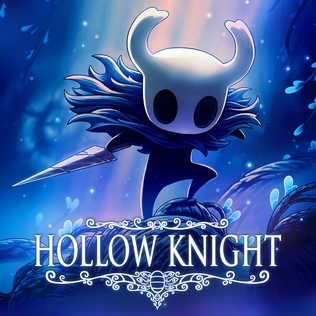
1. The Black Egg Is Introduced as a Locked Mystery
When the Knight first reaches the Forgotten Crossroads, the Black Egg Temple can already be seen as an imposing structure connected to the wider mystery of Hallownest. The building is visually distinctive, but the game provides almost no immediate explanation for its purpose. Its entrance is sealed, and the player cannot simply walk inside. This creates a destination without providing a conventional quest marker.
That distinction is important. In many games, a locked final area communicates a straightforward objective: obtain three keys, defeat three bosses, or complete three quests. Hollow Knight initially avoids that clarity. The Black Egg exists in the player's world before its meaning is understood. The player therefore encounters the mystery first and receives the explanation later.
A destination without a traditional quest
The Seer eventually explains the existence of the Dreamers and the Dream Nail's connection to them, but even this information does not immediately reveal the entire story. The player learns that three Dreamers are responsible for maintaining the seal, yet their role in Hallownest's history remains unclear.
The three names are deliberately mysterious:
- Monomon the Teacher
- Lurien the Watcher
- Herrah the Beast
Their titles sound almost mythological, and their locations are separated across very different regions. This makes the player's eventual objective feel like an investigation rather than a checklist.
The importance of delayed information
The game repeatedly allows the player to encounter evidence before explaining it. This is one of the reasons the Black Egg feels more significant over time. The player is not told everything at the beginning because Hollow Knight wants the meaning of the final objective to change as exploration continues.
At first, the Black Egg is simply a sealed structure. Later, it becomes the prison of the Hollow Knight. Eventually, it becomes evidence of a failed attempt to contain the Infection. That changing interpretation is central to the game's storytelling.
2. The Dream Nail Changes How the Player Understands Hallownest
The acquisition of the Dream Nail fundamentally changes the relationship between the Knight and the world. Before obtaining it, many characters and objects can only be understood through their physical presence and spoken dialogue. After obtaining it, the player gains access to thoughts, memories, spirits, and hidden fragments of information.
This makes the Dream Nail much more than a weapon or utility item. It is effectively a narrative tool that allows the player to cross the boundary between the physical remains of Hallownest and the memories embedded within them.
The world becomes psychologically readable
The Dream Nail allows the Knight to interact with entities that would otherwise remain silent. Warriors encountered in the Resting Grounds, for example, can reveal fragments of personality and history through their dream dialogue. These moments reinforce the idea that Hallownest is not simply a ruined physical kingdom. It is also a collection of memories.
The Dreamers fit naturally into this system because their existence is tied to dreams and mental preservation. They are not simply living rulers waiting behind conventional boss arenas. They are beings whose consciousness has become part of the mechanism preserving the seal.
Dream dialogue as fragmented evidence
The information obtained through the Dream Nail is rarely presented as a complete historical explanation. Instead, it resembles fragments of testimony. A single line might suggest a character's fear, loyalty, regret, or confusion without explaining the broader context.
This forces the player to connect individual pieces of evidence.
The Dream Nail therefore creates a specific type of narrative progression: the player becomes more informed not because a character gives a long exposition speech, but because the world itself becomes increasingly interpretable.

3. Monomon Reveals the Intellectual Side of the Seal
Monomon the Teacher is located in the Teacher's Archives in Fog Canyon, surrounded by an environment strongly associated with research, experimentation, and knowledge. Her location is not arbitrary. It reflects her identity and the role she played in Hallownest's history.
Reaching Monomon requires more than simply walking toward the Black Egg. The player must explore increasingly dangerous regions, acquire movement abilities, and eventually confront Uumuu. This creates a progression in which mechanical challenges surround the narrative objective.
The Teacher's Archives as historical evidence
The Archives provide one of the clearest examples of environmental storytelling in Hollow Knight. The location contains machinery, laboratories, tanks, and remnants of experiments. It communicates that Monomon was deeply involved in attempts to understand or resist the Infection.
Her sacrifice is therefore not presented simply as the death of an important character. She has become part of the system that preserves the seal.
The player can also discover Quirrel, whose connection to Monomon adds another layer to the location. His presence makes the Archives feel less like an abandoned dungeon and more like the remains of a personal and intellectual history.
Why Monomon's destruction matters
Destroying Monomon does not feel like defeating an enemy in the conventional sense. She does not actively attack the Knight as a traditional boss would. Instead, the player enters a preserved chamber and breaks one of the three components maintaining the Black Egg's seal.
This distinction matters because it establishes the Dreamers as sacrifices rather than conventional antagonists.
The Knight is dismantling a protection system without necessarily understanding whether doing so is morally or strategically correct.
4. Lurien Connects the Seal to Hallownest's Royal Power
Lurien the Watcher provides a very different perspective. His resting place is in the Watcher's Spire, positioned above the City of Tears. The location visually connects him to Hallownest's political and royal center.
Where Monomon represents knowledge, Lurien represents observation and loyalty to the kingdom's established order.
The Watcher's Spire
The climb toward Lurien is itself symbolic. The City of Tears is already one of the game's most important locations, filled with architecture that communicates the former scale and sophistication of Hallownest. The Watcher's Spire rises above this ruined city, giving Lurien an elevated position.
His role was to watch over the kingdom and its ruler. Even after Hallownest collapsed, his consciousness remained tied to the preservation of the seal.
This creates an interesting contradiction. The kingdom itself is gone, its citizens are infected or dead, and its political structures have collapsed. Yet Lurien continues to fulfill the duty he accepted.
Loyalty after the kingdom's death
Lurien's existence suggests that the seal was not merely a magical mechanism. It represented a commitment made by individuals who believed that preserving the Hollow Knight was necessary to protect what remained of Hallownest.
The player therefore encounters a kingdom whose most important defenders are no longer actively governing anything. They are preserving an old decision.
That makes the Dreamers important to understanding Hallownest's tragedy: the kingdom's failure did not immediately end its institutions. Instead, its institutions continued operating long after the society that created them had disappeared.
5. Herrah Explains the Personal Cost of the Pact
Herrah the Beast provides the most personal dimension to the Dreamer system. She rests within Deepnest, a location that is fundamentally different from both the Archives and the City of Tears.
Deepnest is hostile, claustrophobic, organic, and unpredictable. Its environment immediately establishes that Herrah belongs to a different culture and political structure from the central kingdom.
The deal involving Herrah
Herrah was not simply another loyal servant of the Pale King. Her connection to Hallownest involved a personal bargain, particularly concerning her daughter Hornet.
This detail dramatically changes the meaning of her role as a Dreamer. She accepted a position in the sealing ritual while leaving behind a personal legacy.
Hornet's existence therefore becomes indirectly connected to the same system that keeps the Hollow Knight imprisoned.
Herrah and the idea of sacrifice
The three Dreamers each sacrifice something, but Herrah's situation makes the personal consequences especially visible. She enters an arrangement designed to protect Hallownest while accepting that her own life and future will be fundamentally altered.
The player does not need a lengthy cutscene to understand this. Deepnest, Hornet's presence, and later discoveries collectively establish the emotional consequences.
Herrah's death therefore adds another layer to the central question: how much can an individual sacrifice for the survival of a kingdom that may already be doomed?
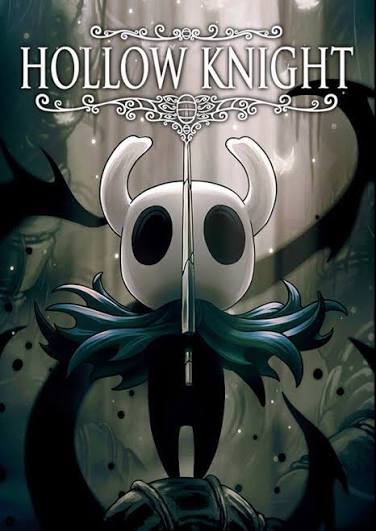
6. Breaking the Three Seals Changes the Meaning of the Knight's Journey
Once all three Dreamers are removed, the Black Egg opens. Mechanically, this is a straightforward progression event. Narratively, however, it represents the collapse of the last major barrier separating the Knight from the truth about the Hollow Knight.
The important detail is that the player has not simply gathered three objects. They have dismantled three living remnants of Hallownest's defense.
From exploration to confrontation
The early game encourages wandering. The player explores Forgotten Crossroads, Greenpath, Fungal Wastes, City of Tears, Crystal Peak, Deepnest, and other regions without necessarily knowing where the journey is heading.
After the Dreamers fall, the game's direction becomes much clearer.
The Black Egg is no longer an abstract mystery. It is the immediate destination.
This transition is effective because the player has already spent many hours learning what Hallownest has become. The final area therefore arrives after extensive contextual preparation.
The cost of opening the Black Egg
The player might initially interpret opening the Black Egg as a victory. Yet the situation is more complicated.
The seals were designed to contain the Infection and preserve the Hollow Knight. Removing them means releasing the player into the final confrontation, but it also means destroying the final remnants of the containment system.
The game does not frame this as an uncomplicated heroic achievement. Instead, it leaves the player to interpret whether the Knight is continuing an old plan, correcting its failure, or simply becoming the next participant in Hallownest's cycle.
7. The Hollow Knight Reveals Why the Seals Were Necessary
Inside the Black Egg, the player finally confronts the Hollow Knight. The encounter provides the missing context behind the entire sealing mechanism.
The Hollow Knight was intended to contain the Radiance and prevent the Infection from spreading through Hallownest. The central tragedy is that this containment was never perfect.
The Hollow Knight became infected, and the Infection continued to spread.
The broken vessel
The Hollow Knight's physical condition immediately communicates failure. This is not a triumphant guardian standing at the end of a heroic adventure. The boss appears damaged, restrained, and consumed by the very force it was supposed to contain.
The player therefore discovers that the final enemy is also a victim of the kingdom's plan.
This changes the emotional meaning of the battle. The Knight is not simply defeating an evil creature. It is confronting another vessel created as part of the same broader system.
The tragedy of substitution
The Knight's relationship to the Hollow Knight becomes especially important because both are vessels connected to the Pale King's attempt to contain the Radiance.
This creates a disturbing possibility: the Knight may not be destroying the system so much as replacing one vessel with another.
The standard ending reinforces this interpretation. After defeating the Hollow Knight, the Knight can take its place within the Black Egg.
The seal is restored, but the underlying problem is not necessarily solved.
8. The Dreamers Are Part of a Failed Solution, Not the Main Villains
One of the most important consequences of understanding the Dreamers is recognizing that they are not conventional antagonists. Their deaths are required for progression, but the game does not establish them as malicious figures who caused Hallownest's destruction.
They are participants in an unsuccessful attempt to contain a much larger problem.
Three people preserving one impossible solution
Monomon, Lurien, and Herrah represent three different relationships with the kingdom:
- Monomon contributes knowledge and research.
- Lurien represents royal loyalty and observation.
- Herrah represents an external ally whose sacrifice is tied to a personal agreement.
Their individual motivations differ, but their roles converge around the same objective.
The seal depends on all three.
This is why the Dreamers work so well structurally. They are mechanically identical in one important sense—they must all be removed—but narratively distinct.
The player inherits the consequences
The Knight arrives long after the original decision has been made. It does not participate in the creation of the plan. It inherits the consequences.
That is a recurring theme throughout Hollow Knight. The Knight enters a world shaped by decisions made by characters who are already dead, absent, or transformed.
The Dreamers are perhaps the clearest example because their sacrifices directly determine the route toward the game's ending.
9. The Dreamers Also Control the Game's Multiple Endings
The Dreamers' destruction does not simply unlock one final boss encounter. It becomes part of a larger system involving the Void, the Hollow Knight, Hornet, the Dream Nail, and the Radiance.
This means the Dreamers serve as an entry point into the game's deeper ending structure.
The basic ending
If the player reaches the Hollow Knight without obtaining the necessary additional discoveries, the confrontation can end with the Knight taking the Hollow Knight's place.
This ending makes the entire Dreamer sequence look like the completion of a replacement ritual.
The three Dreamers disappear, the Black Egg becomes accessible, and the Knight assumes the burden previously carried by another vessel.
From a purely mechanical perspective, the story appears complete.
From a thematic perspective, however, the cycle continues.
The deeper truth
Further exploration and the acquisition of the Awoken Dream Nail allow the player to access a different layer of the story. The White Palace, the King's Brand, the Birthplace, and the Void collectively provide information that the basic route does not require.
This is where the game's earlier mysteries begin to connect.
The player can eventually understand that the Hollow Knight was never simply a normal warrior imprisoned inside the Black Egg. Its existence was part of a much larger attempt to create a vessel capable of containing the Radiance.
The Dreamers are therefore the outer layer of the mystery. The Void and the Radiance form the deeper layer.
10. Why the Dreamer Structure Makes Hollow Knight's Ending So Effective
The Dreamers are one of the best examples of how Hollow Knight turns narrative information into progression. The player begins with a locked Black Egg, encounters three mysterious figures, obtains the Dream Nail, explores their locations, destroys their seals, enters the temple, and eventually confronts the Hollow Knight.
At each stage, the meaning of the previous stage changes.
The Black Egg is first a mystery.
The Dreamers are then revealed as the reason it is sealed.
Their locations reveal pieces of Hallownest's history.
The Hollow Knight reveals the purpose of the seal.
Further exploration reveals that even the Hollow Knight is part of an older and more complicated plan.
The story is discovered backward
One of the cleverest aspects of this structure is that the player effectively learns Hallownest's history in reverse.
First, the player sees the consequences.
Then they discover the people who attempted to control those consequences.
Finally, they uncover the ancient decisions that created the entire situation.
This is why the game's world can feel mysterious without being empty. The absence of exposition is not simply a lack of information. It is part of the intended structure.
The player becomes an investigator
The Knight itself says very little, which shifts much of the interpretive responsibility onto the player.
The game does not constantly tell the player:
“This character did this because…”
Instead, the player must combine:
- Environmental architecture
- NPC dialogue
- Dream Nail thoughts
- Boss encounters
- Item descriptions
- Ancient inscriptions
- Character relationships
- Changes in previously visited areas
This creates a narrative experience where understanding the story is itself a form of exploration.
The final confrontation becomes the consequence of curiosity
Ultimately, the Dreamers are important because they transform curiosity into action.
The player wants to know what is inside the Black Egg.
To find out, the player must explore Hallownest.
Exploration reveals the Dreamers.
The Dreamers reveal the existence of the seal.
Breaking the seal leads to the Hollow Knight.
The Hollow Knight leads to the deeper history of the kingdom.
The story therefore does not sit separately from the game's exploration. The exploration is the method through which the story is constructed.
Conclusion
The Dreamers are one of Hollow Knight's most important structural ideas because they connect three elements that are often separated in other games: progression, world-building, and narrative mystery. Monomon, Lurien, and Herrah are not simply three obstacles placed between the player and the final boss. They are remnants of an ancient decision to contain the Infection, and their continued existence represents the kingdom's refusal to let that decision disappear.
Their locations reinforce their individual identities, while their shared role in the Black Egg creates a larger historical connection. Monomon represents knowledge and experimentation, Lurien represents royal loyalty, and Herrah represents personal sacrifice and an uneasy alliance. Together, they reveal that Hallownest's collapse was not caused by one simple mistake or one conventional villain. It was the consequence of a desperate solution that could only delay the larger threat.
The Dream Nail makes this structure even more effective because it allows the player to access information that exists beneath ordinary physical reality. Memories, thoughts, spirits, and hidden histories gradually turn Hallownest from an abandoned kingdom into a readable historical landscape.
Most importantly, the Dreamers make the final encounter with the Hollow Knight more complicated than a traditional hero-versus-villain confrontation. By the time the Knight reaches the Black Egg, the player has already seen the consequences of Hallownest's failed plan. The Hollow Knight is not simply the final enemy. It is another victim of that plan, another vessel trapped inside a system designed to protect a kingdom that has already fallen.
That is why the Black Egg works so well as the game's central mystery. Its seal is not merely a locked door. It is the physical representation of Hallownest's attempt to preserve an old solution long after that solution had begun to fail. The three Dreamers keep that solution alive, and the Knight's journey gradually dismantles it.
In the end, Hollow Knight turns three seemingly distant characters into the mechanism through which the player understands the entire tragedy of Hallownest. The Dreamers do not simply unlock the final area. They unlock the meaning of the game itself.
110-Character Summary
Three Dreamers preserve Hallownest's failed seal, leading the Knight toward the truth behind the Hollow Knight.